Leaving the hospital can feel like an important finish line. The immediate medical concern has been treated, the person is stable, and returning home may bring a welcome sense of relief.
But for many people, going home is not the end of recovery. It is the beginning of a different stage.
After a stroke, neurological condition, injury, surgery, or serious illness, everyday activities may still feel different. Walking across a room, getting dressed, preparing a meal, communicating clearly, or returning to familiar routines can require more effort than before.
This is where rehabilitation-related care can play an important role: helping people translate medical recovery into meaningful progress in everyday life.
At the American Center for Psychiatry and Neurology, multidisciplinary services in Abu Dhabi and Al Ain can support different aspects of recovery according to each person's individual needs and condition.
Discharge Does Not Always Mean Recovery Is Complete
Hospital care often focuses on the most immediate priorities: diagnosing a condition, providing treatment, managing complications, and helping the patient become medically stable.
Once those goals have been achieved, another question may emerge:
What does the person need to return to everyday life as independently and safely as possible?
Someone may be medically ready to leave the hospital but still experience weakness, reduced balance, difficulty using an arm or hand, challenges with speech or swallowing, fatigue, or difficulty completing familiar daily activities.
These challenges may become more noticeable only after returning to everyday routines.
Rehabilitation helps shift the focus from simply recovering medically to rebuilding function and participation.
Recovery Is About Function, Not Just Symptoms
Improvement is not always measured by whether a symptom has completely disappeared.
For someone recovering from illness or injury, meaningful progress might mean being able to:
Walk more safely.
Get in and out of a chair independently.
Dress or prepare a simple meal.
Use an affected hand more effectively.
Communicate needs more clearly.
Eat and drink more safely.
Return to work or valued activities.
Participate more confidently in family and social life.
These goals are deeply personal. What represents independence for one person may be completely different for another.
A rehabilitation plan should therefore consider not only the person's diagnosis but also what they need and want to do in everyday life.
Different Challenges May Need Different Specialists
Recovery can affect several areas at once, which is why one healthcare discipline may not always address every need.
Depending on the person's condition, care may involve different professionals.
Physiotherapy can support mobility, strength, balance, physical function, and movement. Occupational therapy focuses on helping people participate more independently in daily activities and routines. Speech and language therapy may address communication or swallowing difficulties.
When recovery involves a neurological condition, a neurology doctor may also be involved in evaluating and managing the underlying neurological needs.
The appropriate combination depends on the individual rather than following the same pathway for every patient.
Physiotherapy Can Help Rebuild Movement
After a period of illness, injury, or reduced activity, movements that once felt automatic may require greater effort.
A person may notice weakness, stiffness, reduced endurance, difficulty walking, or uncertainty with balance.
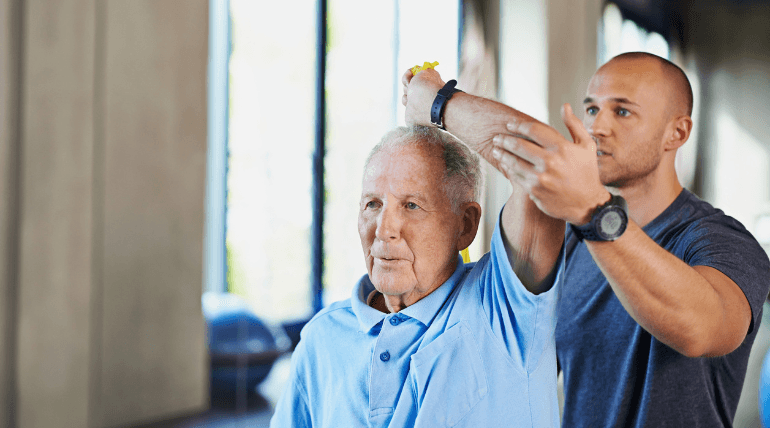
Through physiotherapy in Abu Dhabi, treatment can focus on the specific physical abilities affecting everyday function. Depending on individual needs, this may include working on strength, mobility, balance, coordination, endurance, or movement strategies.
The goal is not simply to perform exercises during a therapy session. It is to help make movement more useful and manageable in real situations—from moving around the home to participating in community life.
Occupational Therapy Helps Bring Recovery Into Daily Life
Recovery becomes especially meaningful when improvements can be used in everyday routines.
That is where occupational therapy can play an important role.
Activities such as dressing, bathing, cooking, writing, using a phone, returning to work, or managing household tasks may become more challenging after illness or injury.
Through occupational therapy in Abu Dhabi and Al Ain, support can focus on the activities that matter to the individual.
This may involve rebuilding specific skills, finding more effective ways to complete tasks, adapting routines, or identifying strategies that support greater independence.
The objective is practical: helping the person participate as fully as possible in the life they want to return to.
Communication and Swallowing Can Be Part of Recovery Too
Recovery is not always visible through movement alone.
A stroke or neurological condition, for example, may affect a person's ability to speak, understand language, communicate thoughts, or swallow safely.
These difficulties can influence independence in profound ways. Being able to express a need, participate in a conversation, enjoy a meal, or communicate with family can be just as meaningful as physical mobility.
Speech and language therapy in Abu Dhabi and Al Ain can support communication and swallowing needs when appropriate.
Addressing these areas can help make rehabilitation more connected to the person's complete everyday experience.
Neurological Recovery Often Requires a Wider View
The brain and nervous system influence movement, sensation, coordination, communication, and many other functions.
After a stroke or with certain neurological conditions, difficulties in several areas may occur at the same time.
In these situations, evaluation by a neurologist in Abu Dhabi or neurologist in Al Ain may help clarify the neurological condition and guide appropriate medical management, while rehabilitation professionals address its functional effects.
A coordinated approach can help connect the medical understanding of the condition with the practical challenges the person experiences each day.
Progress Is Rarely a Straight Line
Recovery can be encouraging one week and frustrating the next.
Some abilities may improve quickly, while others require more time. Fatigue, changes in health, emotional wellbeing, and the complexity of the original condition can all influence progress.
This does not necessarily mean that rehabilitation is failing.
Progress may appear in small but meaningful ways: needing less assistance to stand, walking slightly farther, completing part of a morning routine independently, communicating a thought more easily, or returning to an activity that once seemed out of reach.
Recognizing these changes can help keep rehabilitation focused on meaningful function rather than expecting recovery to follow a perfect timeline.
The Emotional Side of Recovery Matters
Illness or injury can change more than physical ability.
People may experience frustration, uncertainty, loss of confidence, worry about the future, or difficulty adjusting to changes in independence. Family members may also be adapting to new responsibilities and expectations.
Emotional wellbeing deserves attention during recovery, particularly when changes are significant or long-lasting.
When appropriate, psychological or psychiatric support can form part of a broader approach to recovery, helping individuals and families navigate the emotional impact of health changes alongside physical and functional rehabilitation.
Families Can Be Important Partners in Rehabilitation
Much of recovery happens outside appointments.
Family members and caregivers may help with daily routines, encourage recommended activities, notice changes in function, and provide emotional support.
However, supporting recovery does not always mean doing everything for the person.
When safe and appropriate, allowing someone the time and opportunity to complete tasks independently can help reinforce the skills being developed through rehabilitation.
Clear guidance from healthcare professionals can help families understand when assistance is needed and when encouraging independence may be more beneficial.
Recovery Continues Beyond the Hospital Doors
Leaving the hospital can close one chapter of treatment without closing the recovery journey.
For some people, the next stage is about rebuilding movement. For others, it may involve relearning everyday activities, improving communication, managing swallowing difficulties, or adapting to changes caused by a neurological condition.
At the American Center for Psychiatry and Neurology, rehabilitation-related care is supported through available multidisciplinary services. In Abu Dhabi, these include physiotherapy, occupational therapy, speech and language therapy, and neurology. In Al Ain, occupational therapy, speech and language therapy, and neurology can support relevant aspects of recovery.
Because recovery is not defined only by leaving the hospital. It is also about what comes afterward: returning to meaningful routines, rebuilding independence, and moving toward a life that feels more manageable and connected again.