


Running across the playground, climbing stairs, riding a bicycle, or balancing on one foot may seem like simple childhood activities. Yet behind every jump, step, and movement is a complex process involving muscles, joints, the brain, and the nervous system working together.
For some children, these movements develop naturally with practice and experience. For others, activities that appear effortless for their peers can feel challenging.
A child may frequently stumble while walking, struggle to catch a ball, avoid climbing equipment, or find it difficult to coordinate movements during play. These challenges can affect more than physical abilities. They may influence confidence, participation in school activities, social interactions, and willingness to try new experiences.
Every child develops at their own pace, but when balance and coordination difficulties begin affecting everyday activities, understanding the underlying challenges can help families identify the right support.
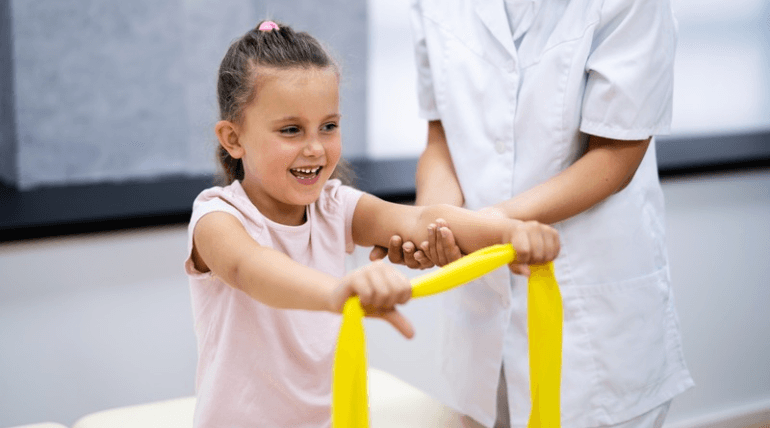
Physiotherapy plays an important role in supporting children's physical development by helping them build strength, improve movement control, develop balance, and participate more confidently in daily activities.
At the American Center for Psychiatry and Neurology, child physiotherapy services in Abu Dhabi support children experiencing movement-related difficulties through individualized assessment and developmentally appropriate rehabilitation.
Understanding Balance and Coordination in Childhood
Balance and coordination are essential components of motor development.
Balance refers to the body's ability to maintain stability while remaining still or moving. It allows children to sit upright, stand independently, walk safely, and adjust their posture during different activities.
Coordination involves the ability to organize and control movements so that different parts of the body work together effectively.
For example, catching a ball requires a child to track its movement visually, judge its speed and direction, position their hands, and coordinate the timing of their movements.
Similarly, climbing stairs requires strength, balance, coordination, and the ability to shift body weight safely.
These abilities develop through a combination of neurological maturation, physical growth, sensory experiences, and opportunities for movement and play.
Because children develop at different rates, occasional clumsiness does not necessarily indicate a developmental problem.
However, persistent difficulties that interfere with daily functioning may benefit from professional assessment.
Why Do Some Children Struggle With Balance and Coordination?
Children may experience motor difficulties for several reasons.
Some challenges are associated with differences in motor development, while others may relate to muscle strength, joint mobility, sensory processing, or neurological conditions.
Possible contributing factors include:
Developmental differences: Some children require additional time or support to develop age-appropriate movement skills.
Reduced muscle strength or endurance: Limited strength may make activities such as climbing, jumping, or maintaining certain positions more difficult.
Motor planning difficulties: Some children find it challenging to plan, organize, and carry out sequences of movement.
Sensory and balance-related difficulties: The body relies on information from vision, the inner ear's vestibular system, and muscles and joints to maintain balance.
Neurological or neuromuscular conditions: Certain conditions may affect muscle tone, coordination, posture, and movement control.
Limited opportunities for physical activity: Children benefit from varied movement experiences that allow them to practice and develop motor skills.
The presence of balance or coordination difficulties does not automatically indicate a neurological disorder.
A comprehensive assessment helps determine whether a child's movement patterns fall within expected developmental variation or require further investigation.
Signs That a Child May Be Experiencing Motor Difficulties
Motor challenges can appear differently depending on a child's age, development, and everyday activities.
Parents and caregivers may notice that their child:
Frequently trips, stumbles, or falls compared with peers.
Finds it difficult to stand on one foot or maintain balance.
Struggles with jumping, hopping, or skipping.
Has difficulty climbing stairs or playground equipment.
Avoids activities involving running, catching, or kicking a ball.
Appears unusually cautious during physical play.
Has trouble coordinating both sides of the body.
Becomes tired quickly during movement-based activities.
Finds it difficult to learn skills such as riding a bicycle.
Shows frustration or reduced confidence during physical activities.
These signs do not establish a diagnosis on their own.
However, when difficulties persist, become more noticeable, or affect participation in everyday life, an assessment by an appropriate healthcare professional may be helpful.
Sudden changes in walking, balance, strength, or coordination require prompt medical evaluation rather than routine developmental monitoring.
How Motor Skills Influence Everyday Childhood Activities
Motor development affects far more than sports and playground activities.
Children rely on balance, strength, and coordination throughout their daily routines.
Getting dressed requires postural control and coordinated movements. Walking through a busy classroom involves balance and spatial awareness. Sitting upright during learning activities requires adequate postural stability.
Even simple transitions, such as getting up from the floor or moving between sitting and standing, depend on coordinated muscle activity.
When these abilities are difficult, children may need more time or assistance to complete everyday tasks.
They may also avoid activities that feel physically demanding or unpredictable.
Supporting motor development can therefore contribute to independence, participation, and confidence across different environments.
The Role of Physiotherapy in Children's Motor Development
Pediatric physiotherapy focuses on supporting movement, physical function, and participation in age-appropriate activities.
A pediatric physiotherapist considers how a child moves, what physical challenges they experience, and how those difficulties affect everyday life.
Assessment may explore muscle strength, joint mobility, posture, balance, coordination, walking patterns, and functional movement skills.
Based on the findings, therapy may involve activities designed to improve:
Balance and postural stability.
Muscle strength and endurance.
Coordination between different body parts.
Walking and movement efficiency.
Gross motor skills such as running, jumping, and climbing.
Confidence during movement-based activities.
Participation in play, school, and family routines.
At the American Center for Psychiatry and Neurology, pediatric physiotherapy in Abu Dhabi supports children with movement-related needs through individualized care that considers their developmental stage and functional goals.
The objective is not to make every child move in exactly the same way, but to help each child develop the abilities needed for meaningful participation in everyday life.
Improving Balance Through Play and Movement
Children learn many physical skills through play.
Activities such as stepping over obstacles, walking along a marked line, standing on different surfaces, and moving between positions provide opportunities to practice balance and body control.
Physiotherapy may incorporate similar activities in a structured, developmentally appropriate way.
For example, a child who struggles with standing balance may begin with supported activities before progressing to more challenging movements.
Another child may practice shifting weight between their legs, stepping over small obstacles, or maintaining stability while reaching for toys.
These activities can help develop postural control and confidence when selected according to the child's abilities and safety needs.
Play-based rehabilitation also helps make movement practice more engaging and meaningful.
Rather than focusing only on repetitive exercises, therapy can use enjoyable activities that encourage children to participate actively.
How Coordination Develops Through Practice
Coordination involves the ability to control the timing, direction, and sequence of movements.
It is important for activities such as catching a ball, jumping with both feet, riding a bicycle, and navigating playground equipment.
Some children may find it difficult to coordinate their arms and legs or perform movements that require several steps.
Physiotherapy may help by breaking complex movements into smaller, manageable components.
For example, learning to jump may begin with practicing bending the knees, pushing through the legs, and landing with control.
Ball activities may start with rolling or gently tossing a large ball before progressing to catching smaller or faster-moving objects.
The complexity of activities can gradually increase as the child develops confidence and skill.
Repeated practice in a supportive environment may help children become more comfortable with movement challenges.
The Importance of Core Strength and Postural Control
Postural control refers to the body's ability to maintain and adjust its position during movement and rest.
It plays an important role in sitting, standing, walking, reaching, and participating in physical activities.
The muscles around the trunk and pelvis contribute to stability during many everyday movements.
When strength or postural endurance is limited, some children may find it difficult to maintain certain positions or perform activities that require sustained physical effort.
A child may frequently change sitting positions, lean against furniture for support, or become tired during activities that require standing or moving for extended periods.
These observations can have several explanations and do not necessarily indicate weak core muscles.
A physiotherapist can assess whether strength or postural control is contributing to the child's difficulties.
When appropriate, therapy may include activities such as climbing, reaching, crawling, supported balancing, or other exercises that encourage trunk control and coordinated movement.
When Motor Difficulties Affect School and Social Confidence
Movement challenges can influence how children experience school and social activities.
Physical education, playground games, and group sports often involve running, jumping, catching, and coordinating movements with others.
A child who finds these activities difficult may begin avoiding them.
They may feel embarrassed when they cannot keep up with classmates or become frustrated when learning a new physical skill takes longer than expected.
Over time, repeated negative experiences can affect confidence and willingness to participate.
This does not mean that every child with motor difficulties will experience emotional challenges.
However, understanding the social and emotional impact of physical difficulties is an important part of supporting the whole child.
Physiotherapy may help children develop relevant movement skills and build confidence through achievable, progressively challenging activities.
Parents and teachers can also help by encouraging participation without unnecessary comparison or pressure.
The Connection Between Motor Planning and Coordination
Some children understand what they want to do physically but struggle to organize the movements needed to complete the activity.
This may involve difficulties with motor planning, sometimes referred to as praxis.
For example, a child may know how a playground obstacle course works but find it difficult to sequence the movements required to complete it.
They may need additional demonstrations, practice, or time to learn unfamiliar motor activities.
Motor planning difficulties can occur in different developmental contexts, including developmental coordination disorder, although diagnosis requires appropriate professional assessment.
Physiotherapy may support gross motor planning and movement practice, while occupational therapy may address functional motor skills and daily activities.
At ACPN, both physiotherapy and occupational therapy in Abu Dhabi are available, allowing relevant services to be considered according to the child's needs.
How Physiotherapy and Occupational Therapy Can Work Together
Although physiotherapy and occupational therapy have different areas of focus, they may complement each other when a child experiences multiple developmental or functional challenges.
Physiotherapy often focuses on gross motor abilities, including mobility, balance, strength, and movement control.
Occupational therapy focuses on participation in everyday activities, which may involve fine motor skills, sensory-related needs, self-care, and functional independence.
For example, a child who struggles with balance during play may benefit from physiotherapy activities targeting stability and coordination.
If the same child also finds dressing, handwriting, or other daily activities difficult, occupational therapy may provide additional assessment and support.
The need for either service depends on the child's individual presentation rather than the presence of a particular symptom alone.
For families seeking occupational therapy in Abu Dhabi or child physiotherapy in Abu Dhabi, understanding the distinct roles of these services can help guide appropriate care.
When Should Parents Consider a Neurological Assessment?
Not all motor difficulties are related to neurological conditions.
However, some children may require additional medical evaluation when movement difficulties are significant, persistent, progressive, or accompanied by other concerning symptoms.
A pediatric neurological assessment may be considered when a child experiences:
Unusual muscle stiffness or marked weakness.
Persistent asymmetry in movement or muscle use.
Loss of previously acquired motor abilities.
Unexplained changes in walking or coordination.
Balance difficulties accompanied by other neurological symptoms.
Sudden loss of coordination, new weakness, or abrupt difficulty walking requires urgent medical assessment.
A pediatric neurologist in Abu Dhabi may help evaluate possible neurological contributors to movement difficulties and determine whether further investigations or specialist care are needed.
At the American Center for Psychiatry and Neurology, pediatric neurology in Abu Dhabi is among the relevant services available for children who require neurological evaluation.
Physiotherapy may then form part of a broader care plan when clinically appropriate.
How Parents Can Encourage Motor Development at Home
Children benefit from opportunities to move, explore, and practice physical skills in safe and supportive environments.
Parents do not need to turn every activity into a formal exercise session.
Instead, everyday play can offer valuable opportunities for movement.
Helpful approaches include:
Encourage active play. Provide opportunities for walking, running, climbing, and other age-appropriate activities.
Introduce movement challenges gradually. Allow children to practice skills at a level that feels manageable before increasing difficulty.
Make activities enjoyable. Games involving balls, movement, and simple obstacle courses can encourage participation.
Avoid constant comparison. Children develop at different rates, and progress should be considered in relation to their individual abilities.
Recognize effort and improvement. Celebrate persistence and small achievements rather than focusing only on performance.
Provide appropriate supervision. Activities should match the child's developmental stage, abilities, and safety needs.
Follow professional recommendations. When a child is receiving physiotherapy, home activities should reflect the guidance provided by the treating professional.
The goal is to help children associate movement with exploration, enjoyment, and growing confidence.
Why Early Support Can Make a Difference
Childhood provides many opportunities for developing motor skills through growth, practice, and experience.
When movement difficulties are identified early, families may be able to access guidance before challenges begin significantly affecting daily participation.
Early support can help clarify whether a child needs targeted intervention, environmental adjustments, or simply appropriate opportunities for skill development.
For children who require therapy, individualized activities may help strengthen relevant abilities and support participation in school, play, and home routines.
However, early intervention does not guarantee that every difficulty will disappear.
Progress depends on the underlying cause, the child's developmental profile, and other individual factors.
The purpose of early assessment is to understand the child's needs and provide appropriate support at the right time.
Supporting Every Child's Confidence in Movement
Balance and coordination are more than physical abilities. They help children explore their surroundings, participate in play, develop independence, and engage with the world around them.
When these skills are difficult, children may need additional time, practice, or professional support to feel comfortable with movement.
Physiotherapy can help identify the physical and functional factors affecting a child's motor development and provide structured opportunities to build relevant skills.
At the American Center for Psychiatry and Neurology, child physiotherapy in Abu Dhabi supports children experiencing balance, coordination, mobility, and other movement-related challenges.
With access to occupational therapy and pediatric neurology in Abu Dhabi when appropriate, families can explore different aspects of their child's developmental and functional needs.
For parents seeking pediatric physiotherapy in Abu Dhabi or guidance about their child's motor development, professional assessment can help identify practical steps toward improving movement and everyday participation.
Because every step, jump, and new movement is more than a physical achievement. It is an opportunity for a child to explore, participate, and grow in confidence.