
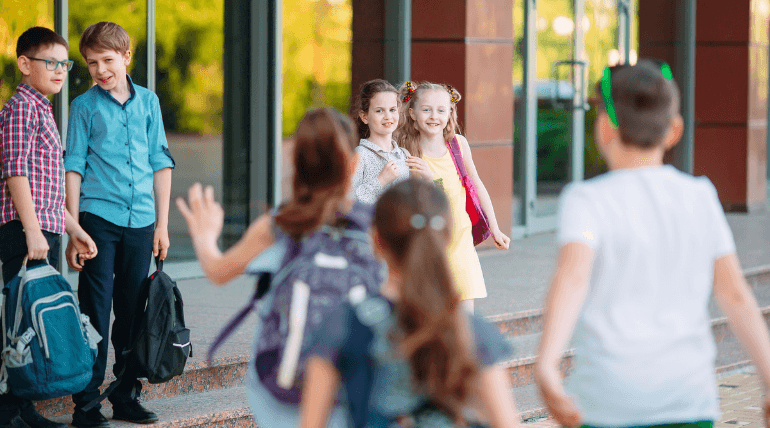
A child walks towards a group of classmates playing together but hesitates before joining. Another wants to share an exciting story but struggles to find the right words. A third becomes frustrated when friends misunderstand what they are trying to say.
These everyday moments may seem small, but for children, communication plays an important role in building friendships, developing confidence, and feeling connected to others.
Communication is about much more than pronouncing words correctly or forming complete sentences. It involves understanding others, expressing thoughts and emotions, taking turns in conversations, recognising social cues, and knowing how to respond in different situations.
For some children, these skills develop naturally through everyday interactions. Others may need additional support to understand and navigate the social demands of communication.
When children struggle to communicate effectively, the impact can extend beyond speech and language, influencing their friendships, classroom participation, emotional wellbeing, and self-confidence.
When children struggle to communicate effectively, the impact can extend beyond speech and language, influencing their friendships, classroom participation, emotional wellbeing, and self-confidence.
Understanding the relationship between communication and social development can help parents recognise potential difficulties and support their child's ability to connect with the world around them.
At the American Center for Psychiatry and Neurology (ACPN), child speech and language therapy services in Abu Dhabi and Al Ain support children experiencing speech, language, and communication difficulties through individualised assessment and therapeutic interventions.
Communication Is More Than Words
When parents think about speech development, they often focus on when their child begins talking, how clearly they pronounce words, or whether they can form sentences.
While these milestones are important, successful communication involves several interconnected skills.
Children need to understand what others say, express their own ideas, and use language appropriately in different social situations.
For example, joining a playground game may require a child to ask permission, understand the rules, respond to another child's suggestions, and negotiate disagreements.
Similarly, participating in a classroom discussion involves listening, waiting for a turn, organising thoughts, and recognising when someone else wants to speak.
These abilities form part of a broader set of communication skills that support everyday interactions.
They include:
Expressive language: Using words and sentences to communicate thoughts, feelings, and needs.
Receptive language: Understanding spoken language, questions, instructions, and conversations.
Speech sound production: Producing speech sounds clearly enough to be understood.
Social communication: Using verbal and non-verbal communication appropriately in different situations.
Conversation skills: Initiating interactions, taking turns, staying on topic, and responding to others.
Non-verbal communication: Understanding and using gestures, facial expressions, body language, and tone of voice.
Children develop these skills at different rates, and their communication styles may vary depending on their age, personality, language background, and developmental profile.
How Communication Skills Help Children Build Friendships
Friendships are an important part of childhood.
Through friendships, children learn cooperation, empathy, problem-solving, and how to navigate different perspectives.
Communication allows these relationships to begin and develop.
A child may start a friendship by asking another child to play, sharing a toy, or expressing interest in a common activity.
As friendships grow, communication becomes important for sharing experiences, resolving disagreements, and expressing feelings.
Children who can communicate their intentions clearly may find it easier to participate in group activities and maintain positive interactions.
However, children with speech or language difficulties may experience additional challenges.
A child who struggles to find words may hesitate to initiate conversations.
Another who has difficulty understanding complex instructions may feel excluded during group games.
A child whose speech is difficult for others to understand may become frustrated when asked to repeat themselves.
These experiences do not mean the child lacks interest in friendships or social connection.
Rather, communication barriers may make it harder for them to participate in ways that feel comfortable and successful.
Supporting communication skills can help reduce these barriers and create more opportunities for meaningful relationships.
What Are Social Communication Skills?
Social communication refers to how people use language and other forms of communication during interactions with others.
It is sometimes described as pragmatic language.
These skills help children understand not only what words mean, but also how communication changes depending on the situation and the person they are speaking with.
For example, a child may use different language when talking to a teacher than when speaking with a close friend.
They may learn when to ask questions, how to take conversational turns, or how to recognise that someone has misunderstood them.
Social communication skills include:
Starting and ending conversations appropriately.
Taking turns when speaking and listening.
Staying on topic and changing topics when appropriate.
Asking questions and responding to others.
Understanding gestures, facial expressions, and tone of voice.
Adjusting language to different social situations.
Recognising when communication has broken down.
Clarifying messages when someone does not understand.
Understanding humour, figurative language, and implied meanings as development progresses.
Not all children use these skills in the same way.
Cultural expectations, individual communication preferences, and neurodevelopmental differences can influence social interaction.
The aim of support is not to force every child into one communication style, but to help them communicate effectively, understand others, and participate in meaningful relationships.
When Speech Difficulties Affect a Child's Confidence
Children often become increasingly aware of how they communicate as they grow older.
They may notice differences between their speech and that of their classmates, particularly when they begin school and participate in more structured conversations.
For some children, speech difficulties can affect confidence.
A child who struggles to pronounce certain sounds may avoid saying particular words.
Another may speak less during group activities because they worry about being misunderstood.
Children who stutter may experience frustration or anxiety in situations where they feel pressure to speak quickly.
Repeated experiences of misunderstanding, interruption, or negative reactions from others may influence how children feel about communicating.
However, not every child with a speech difficulty experiences low confidence.
Children's emotional responses vary, and supportive environments can make a meaningful difference.
Parents and teachers can help by allowing children sufficient time to speak, listening patiently, and focusing on what the child wants to communicate rather than only how the words sound.
When communication difficulties begin affecting participation or emotional wellbeing, professional support may help address both the communication needs and their everyday impact.
The Connection Between Language Development and Social Interaction
Language development and social development are closely connected.
Children use language to express preferences, negotiate with peers, share ideas, and understand other people's experiences.
As their language abilities develop, they gain more tools for navigating increasingly complex social situations.
For example, younger children may rely on short phrases or gestures to communicate during play.
Older children may need to explain rules, describe events, understand jokes, or resolve disagreements through conversation.
Children with receptive language difficulties may misunderstand instructions, questions, or comments from their peers.
Those with expressive language difficulties may know what they want to say but struggle to organise their thoughts into words.
These challenges can sometimes lead to frustration, withdrawal, or misunderstandings.
A child who does not respond to a question may appear uninterested when they have actually struggled to understand it.
Similarly, a child who gives a brief answer may have difficulty expressing a more detailed response.
Recognising these possibilities can help adults respond with greater understanding.
How Communication Difficulties Can Affect Classroom Participation
School is one of the most important environments for developing communication skills.
Throughout the day, children listen to instructions, ask questions, participate in discussions, and collaborate with classmates.
These activities require a combination of speech, language, attention, and social communication abilities.
A child with communication difficulties may find it challenging to:
Understand multi-step classroom instructions.
Ask for help when something is unclear.
Explain their ideas during group activities.
Answer questions in front of classmates.
Follow conversations involving several speakers.
Participate in collaborative learning tasks.
Understand jokes or indirect language.
Resolve misunderstandings with peers.
These difficulties may affect classroom engagement and, in some cases, academic progress.
Some children may become quiet and withdrawn, while others may appear distracted or frustrated.
However, communication difficulties should not automatically be interpreted as a lack of motivation, intelligence, or interest in learning.
Appropriate classroom adjustments, clear instructions, visual supports, and collaboration with a speech and language therapist may help children participate more comfortably.
Why Some Children Struggle With Conversation Skills
Conversations involve more than speaking.
They require children to listen, process information, interpret social cues, organise responses, and adjust their communication as the interaction develops.
For example, a child needs to recognise when another person has finished speaking before taking a turn.
They may also need to notice when someone appears confused and explain their message differently.
Some children find these processes challenging because of language difficulties, attention-related concerns, or differences in social communication development.
Others may have limited opportunities to practise conversational skills or feel anxious in unfamiliar social situations.
Possible signs of conversational difficulties include:
Frequently interrupting or struggling with turn-taking.
Finding it difficult to begin conversations.
Giving responses that seem unrelated to the topic.
Having difficulty explaining events in a clear sequence.
Struggling to understand indirect requests or implied meanings.
Repeating the same topic without recognising others' responses.
Finding group conversations overwhelming.
Having difficulty repairing misunderstandings.
These behaviours should be considered within the child's age, developmental abilities, language background, and individual communication style.
A speech and language assessment can help clarify which skills may benefit from support.
Social Communication Differences and Neurodevelopmental Conditions
Some children with neurodevelopmental conditions may experience differences in how they communicate and interact socially.
For example, autistic children may use language, gestures, facial expressions, or conversational patterns differently from their peers.
Some may prefer direct communication, find implied meanings difficult to interpret, or experience challenges during unpredictable group interactions.
Other autistic children may communicate fluently but still find certain social situations demanding.
Children with ADHD may experience difficulties involving attention, impulsivity, and conversational turn-taking.
For example, they may interrupt unintentionally, lose track of a conversation, or struggle to wait before responding.
However, social communication difficulties do not automatically indicate autism or ADHD.
They can occur for many reasons, including speech and language disorders, hearing difficulties, anxiety, and individual developmental differences.
A comprehensive assessment considers the child's overall development rather than relying on one behaviour or symptom.
When appropriate, speech and language therapy may form part of a broader support plan involving psychology, psychiatry, or other relevant professionals.
The Emotional Impact of Being Misunderstood
Communication difficulties can sometimes become emotionally exhausting for children.
Imagine trying to explain something important but repeatedly struggling to find the right words.
Or wanting to join a conversation but finding it difficult to follow what everyone is saying.
For some children, these experiences can lead to frustration, embarrassment, or withdrawal.
They may begin avoiding situations where communication feels difficult.
Others may respond with emotional outbursts when they cannot express their needs or resolve misunderstandings.
Over time, repeated communication challenges may influence confidence and willingness to participate.
However, these outcomes are not inevitable.
Supportive relationships, patient communication partners, and appropriate intervention can help children feel understood and valued.
Adults can make a difference by recognising the effort behind communication and responding to the child's message with patience and respect.
How Play Supports Speech, Language, and Social Development
Play provides children with opportunities to practise communication in meaningful and enjoyable ways.
During play, children learn to request objects, negotiate roles, share ideas, and respond to others.
Pretend play may encourage storytelling, imaginative language, and understanding different perspectives.
Board games can provide opportunities to practise turn-taking, following rules, and managing disagreements.
Cooperative activities may help children develop shared attention, problem-solving, and conversational skills.
For younger children, everyday interactions such as singing, reading, and playing together can support language development.
For older children, group games, shared interests, and collaborative activities can encourage communication.
The goal is not to turn every interaction into a formal lesson.
Instead, parents can create natural opportunities for children to communicate, experiment with language, and experience successful interactions.
How Speech and Language Therapy Supports Social Communication
Speech and language therapy helps children who experience difficulties with speech production, language understanding, language expression, and social communication.
A speech and language therapist assesses the child's communication abilities and identifies areas where additional support may be beneficial.
Assessment may involve:
Discussions with parents about developmental and communication concerns.
Observation of the child's communication during play or conversation.
Evaluation of speech clarity and language abilities.
Assessment of understanding and expression.
Exploration of conversational and social communication skills.
Consideration of the child's communication needs at home and school.
Depending on the findings, therapy may focus on:
Developing expressive language: Helping children communicate ideas, feelings, and experiences more clearly.
Strengthening receptive language: Supporting understanding of questions, instructions, and conversations.
Improving speech clarity: Addressing speech sound difficulties when clinically indicated.
Supporting conversation skills: Practising turn-taking, topic maintenance, and clarification strategies.
Building social communication abilities: Helping children understand communication expectations and navigate interactions in ways that respect their individual needs.
Developing functional communication: Supporting the ability to request help, express preferences, and participate in everyday activities.
Guiding parents and caregivers: Providing strategies that can be incorporated into daily routines.
Therapy approaches vary according to the child's age, developmental profile, communication preferences, and clinical needs.
For families seeking speech therapy in Abu Dhabi, a speech therapist in Abu Dhabi, or child speech and language support in Al Ain, an individualised assessment can help determine appropriate next steps.
Can Speech Therapy Improve a Child's Confidence?
Speech and language therapy primarily addresses communication needs, but improvements in functional communication may also support a child's confidence and participation.
For example, a child who becomes more comfortable expressing their ideas may begin participating more frequently in classroom discussions.
Another child who learns strategies for managing communication breakdowns may feel less frustrated during conversations.
A child with speech sound difficulties may gain confidence as their speech becomes easier for others to understand.
However, confidence is influenced by many factors, including relationships, personality, previous experiences, and the responses of others.
Speech therapy does not guarantee changes in self-esteem, and some children may benefit from additional psychological support when emotional difficulties are significant.
A collaborative approach can help address both communication needs and their broader impact on daily life.
Practical Ways Parents Can Encourage Communication and Friendships
Parents can support communication development through everyday interactions without placing unnecessary pressure on their child.
Create opportunities for conversation. Encourage your child to share experiences, interests, and opinions during relaxed daily routines.
Listen patiently. Allow enough time for your child to express their thoughts without frequently interrupting or completing sentences.
Follow your child's interests. Conversations about preferred activities can make communication more motivating and enjoyable.
Model conversational turn-taking. Demonstrate listening, asking questions, and responding to others during family discussions.
Use play to practise interaction. Board games, pretend play, and cooperative activities can create natural opportunities for communication.
Help your child navigate misunderstandings. Teach simple strategies such as repeating a message, explaining it differently, or asking for clarification.
Encourage positive peer experiences. Support opportunities for friendships through shared interests and suitable group activities.
Respect different communication styles. Avoid forcing eye contact or social behaviours that cause unnecessary discomfort. Focus on meaningful communication and mutual understanding.
Recognise communication efforts. Acknowledge your child's attempts to express ideas and connect with others, even when communication is difficult.
Seek professional guidance when concerns persist. Early assessment may help clarify difficulties and identify appropriate support.
Consistent encouragement and positive interactions can help children develop communication skills at a pace that reflects their individual needs.
The Importance of Collaboration Between Parents, Teachers, and Therapists
Children communicate in different ways across home, school, and social environments.
A child who speaks comfortably at home may struggle to participate in classroom discussions.
Another may communicate well with familiar adults but find peer interactions challenging.
Sharing observations between parents, teachers, and speech and language therapists can help create a clearer understanding of the child's needs.
Collaborative strategies may include:
Using clear, age-appropriate instructions.
Allowing additional processing and response time.
Supporting participation in small-group activities.
Providing visual cues when helpful.
Creating structured opportunities for peer interaction.
Encouraging communication without excessive correction.
Reinforcing functional communication strategies across settings.
Consistency across environments can help children practise skills and use them more confidently in everyday situations.
When Should Parents Consider a Speech and Language Assessment?
Children develop communication skills at different rates, and occasional difficulties do not always indicate a disorder.
However, professional assessment may be helpful when a child:
Has difficulty expressing needs, thoughts, or feelings.
Frequently struggles to understand questions or instructions.
Is often difficult for others to understand.
Finds conversations or turn-taking unusually challenging for their age.
Experiences repeated misunderstandings with peers.
Avoids social interaction because communication feels difficult.
Becomes frequently frustrated when trying to communicate.
Struggles to participate in classroom discussions or group activities.
Shows a loss of previously acquired communication skills.
A loss of previously acquired language or communication abilities warrants prompt professional assessment.
Hearing concerns should also be considered, as hearing difficulties can affect speech, language, and social communication development.
A qualified speech and language therapist can assess the child's needs and recommend appropriate interventions or referrals.
Child Speech and Language Therapy in Abu Dhabi and Al Ain
Every child communicates differently, and effective support begins with understanding their individual strengths and challenges.
At the American Center for Psychiatry and Neurology, speech and language therapy services support children experiencing speech, language, and communication difficulties.
Abu Dhabi: Families searching for speech therapy in Abu Dhabi, a speech therapist in Abu Dhabi, a speech therapy centre in Abu Dhabi, or a child speech therapist in Abu Dhabi can access specialist speech and language therapy services.
Al Ain: Families seeking support for children's speech, language, and social communication development can explore speech and language therapy services at ACPN's Al Ain branch.
Assessment and treatment recommendations are based on the child's developmental profile, communication needs, and individual circumstances.
Helping Children Find Their Voice and Build Meaningful Connections
For children, communication is about much more than speaking clearly.
It is how they make friends, share experiences, express emotions, ask for help, and develop a sense of belonging.
When speech, language, or social communication difficulties interfere with these experiences, children may need additional support to participate comfortably and confidently.
Recognising communication challenges early can help families understand their child's needs and identify strategies that support development.
Through appropriate assessment, individualised speech and language therapy, and collaboration with families and schools, children can be supported in developing skills that make everyday interactions more accessible and meaningful.
At the American Center for Psychiatry and Neurology, child speech and language therapy services in Abu Dhabi and Al Ain provide support for children experiencing communication difficulties.
Whether you are looking for speech therapy in Abu Dhabi, a speech therapist in Abu Dhabi, or speech and language therapy for children in Al Ain, professional guidance can help your family explore suitable support options.
Because communication is not only about finding the right words. It is about being understood, building friendships, expressing individuality, and feeling confident enough to connect with the world.